
Why Is My Car A/C Blowing Warm Air in Doral, FL?
Nobody Wants Warm Air in a Doral Summer
You turn the A/C on, wait a minute, and the air coming out of the vents is barely cool — or worse, warm. In South Florida, that is not a minor inconvenience. With temperatures in the 90s and humidity that makes everything feel ten degrees hotter, a working car air conditioner is not optional.
Before you assume the worst, know that most A/C problems have a clear cause and a straightforward fix. Here is what we see most often at our Doral shop, and what you can do about it.
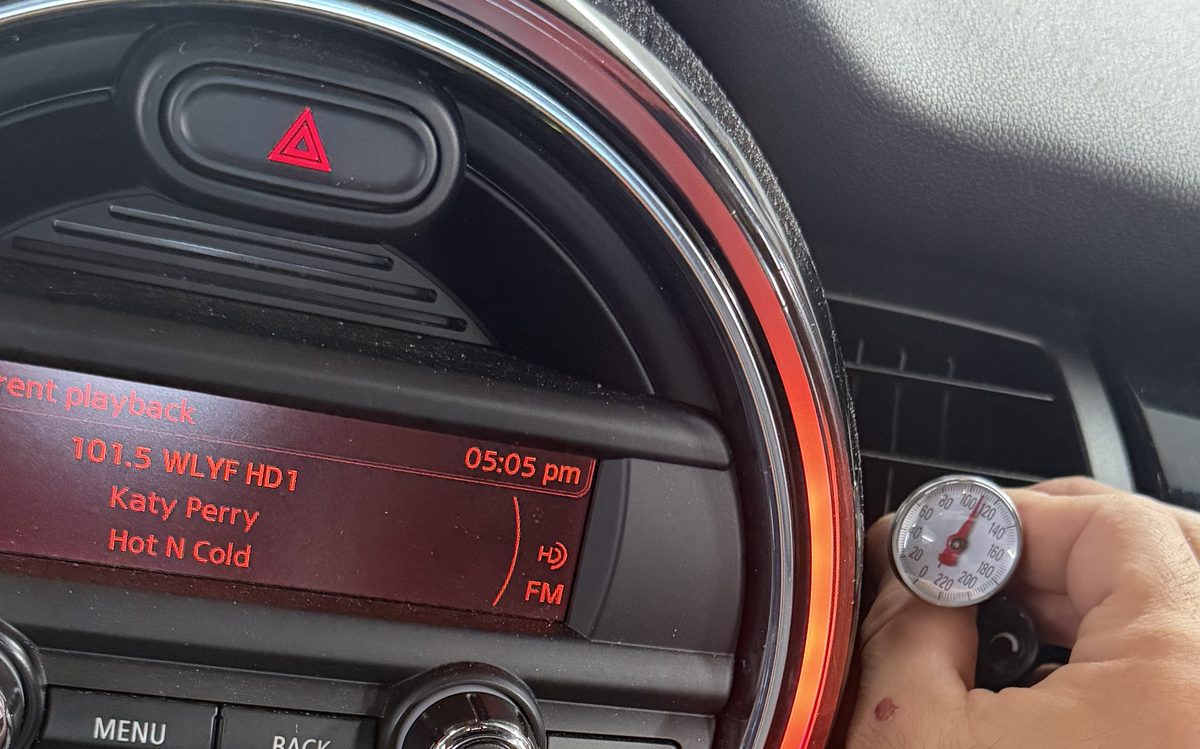
Checking vent temperature is one part of evaluating a vehicle’s A/C performance when the system is not cooling properly.
Common reasons your car A/C is blowing warm air
Low refrigerant from a leak. This is the most frequent cause. Your A/C system is sealed, so refrigerant does not get used up like gasoline. If the level is low, there is a leak somewhere — in a hose, a fitting, the condenser, or the evaporator. We use UV dye testing and electronic leak detection to find even the smallest leaks before recharging the system.
A failing compressor. The compressor is the pump that circulates refrigerant through the system. When it starts to wear out, you may hear a clicking or grinding noise when the A/C kicks on, or the air may cool intermittently. A seized compressor can also damage the serpentine belt, which affects other engine components.
A clogged or damaged condenser. The condenser sits behind the front grille and works like a radiator for the refrigerant. Road debris, bugs, and dirt build up over time and block airflow. A bent or punctured condenser can also leak refrigerant.
A bad blend door actuator. The blend door controls whether air goes through the heater core or the evaporator. If the actuator fails, your system might mix heated air with cooled air, so the vents blow lukewarm even though the compressor and refrigerant are fine. You might also hear a faint clicking or tapping from behind the dashboard.
Cooling-fan failure. The cooling fan pulls air through the condenser when you are stopped or moving slowly. If the fan motor burns out or the relay fails, the condenser cannot shed heat and the A/C output warms up, especially in stop-and-go traffic or at idle — exactly when you need cold air the most.
Electrical or relay problems. Sometimes the mechanical parts are fine but a blown fuse, a corroded relay, or a wiring fault prevents the compressor from engaging. These issues can be intermittent, which makes them frustrating to track down without proper diagnostic tools.
Why South Florida is harder on your A/C
Doral’s heat and humidity force your car’s air-conditioning system to work harder and longer than it would in a cooler climate. The compressor runs almost continuously, rubber seals and O-rings dry out faster, and the condenser is constantly fighting ambient temperatures above 90°F. That added stress means components wear out sooner and small refrigerant leaks grow faster.
Salt air from nearby coastal areas also accelerates corrosion on metal fittings and condenser fins. If you park outdoors regularly, the UV exposure does not help either.
What you can check in five minutes
Before scheduling a visit, there are a few things you can look at yourself:
- Cabin air filter. A clogged cabin filter restricts airflow from the vents. Check your owner’s manual for the location — on most vehicles it is behind the glove box. If it is dark and packed with debris, replace it.
- A/C settings. Make sure you are set to “A/C on” and not just fan. Also check that recirculation mode is enabled — pulling in hot outside air makes the system work harder.
- Engine temperature gauge. If your engine is running hot, the A/C will not cool well. An overheating engine needs attention before the A/C does.
- Visible damage. Look at the front of the vehicle for obvious condenser damage or heavy debris buildup behind the grille.
When it needs a professional diagnosis
If the quick checks above do not reveal an obvious problem, the issue is inside the system and requires tools and training to diagnose safely. Refrigerant is under pressure, and the system includes high-voltage components on some newer vehicles.
Bring your vehicle in if you notice:
- Air that is cool but not cold
- Cold air that fades after a few minutes
- A/C that works on the highway but not at idle
- Strange noises when the A/C is running
- A musty or chemical smell from the vents
- Water pooling under the dashboard
What a professional A/C diagnostic covers
At America Auto Repair, a full A/C diagnostic and repair service includes testing system pressure on both the high and low sides, checking refrigerant level and condition, inspecting the compressor clutch engagement, examining the condenser and evaporator for leaks or damage, testing the cooling fan and its relay, measuring vent temperature output, and inspecting belts and hoses for wear.
We identify the actual cause before recommending a repair — no guessing, no unnecessary parts. Every A/C repair comes with our 36-month/36,000-mile warranty.
If your car’s air conditioning is not keeping up with the Doral heat, call us at (305) 592-8389 or book an appointment online.